
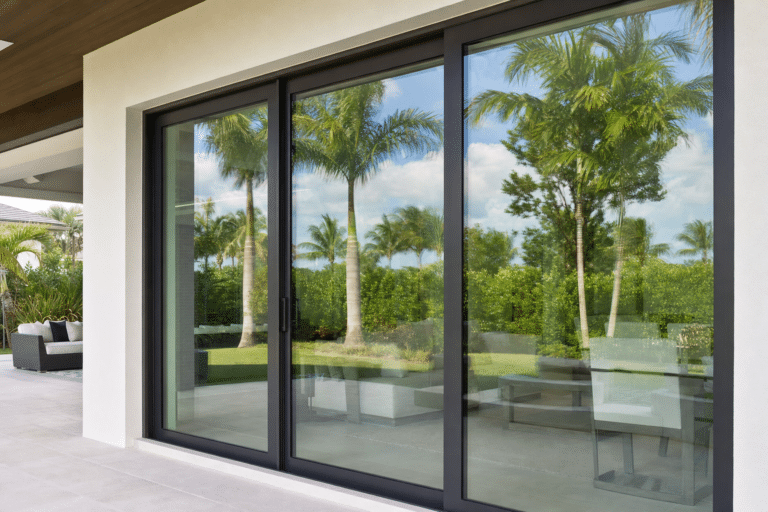
Your patio door lock won't latch. Maybe the key turns and nothing happens, or the whole mechanism has seized up. Either way, your Miami home is exposed right now, both to break-ins and to whatever hurricane season throws at it. That's not a small annoyance. A patio door is one of the biggest access points into your house, and a failing lock leaves your family standing on the wrong side of it. We fix patio door locks fast throughout Miami, with same-day service that gets your security back today. Our technicians carry common lock components on every call, so we can usually finish the repair in one visit. Call us at (786) 558-7575 or schedule your appointment online for an honest diagnosis and a repair recommendation you can trust.
Don't leave your Miami home vulnerable one more day. We run same-day patio door lock repair across Miami-Dade County, from Miami Beach to Kendall, Coral Gables to Aventura. Since our trucks stock the most common lock parts and replacement hardware, most repairs wrap up in a single trip. Stuck, broken, corroded from salt air, or just refusing to engage: whatever's wrong, we'll tell you exactly what's happening and whether a repair or a replacement is the smarter call for your situation and your budget. We don't push replacements you don't need. Our reputation runs on straight talk and clean work. Call (786) 558-7575 to reach our team, or contact us online to book your service.
Miami's coastal climate wears out patio door locks much faster than almost anywhere else. We see failures here at close to three times the rate of inland locations, and the reason comes down to a few brutal environmental factors working together.
Live anywhere from Miami Beach to Key Biscayne or coastal Coral Gables, and salt air is attacking your patio door hardware every single day. Salt particles work their way into the lock, pull in moisture, and form corrosive compounds that chew through metal. We see it worst in mortise assemblies, where the springs, actuators, and latch corrode from the inside out. Often there's no visible damage at all until the lock quits on you. Homes within two miles of the ocean take the hardest hit, but even Doral and Miami Lakes get elevated salt exposure carried in on the sea breeze (NIH).
Miami's humidity stays above 80% year-round, and that drives metal expansion, lubricant breakdown, and faster oxidation. Lock cylinders depend on tight tolerances. When the metal swells from absorbed moisture, latches stick and keys stop turning smoothly. Then there's the sun. South Florida UV degrades plastic components and the protective coatings that shield metal from corrosion. Add thermal cycling (locks hitting 120°F in direct sun, then cooling overnight) and you get stress fractures in both metal and composite parts.
We handle every kind of patio door lock failure, but a handful show up far more often in Miami homes because of our climate.
Latch misalignment is the single most common problem we see, roughly 40% of our service calls. You'll know it when the door looks closed but won't lock, or you have to lift or shove it to get the latch to catch. It happens because doors settle over time, frames shift in Miami's expansive soils, or the door drops on its track from worn rollers. We assess the door's alignment, reposition the strike plate, and when needed, fix the roller or alignment issue that started the trouble in the first place.
The actuator is the internal part that turns your handle or key motion into an engaged latch. When it fails (usually corrosion or metal fatigue), you'll turn the key or pull the handle and feel nothing, or hear a click with no lock behind it. These failures hit suddenly and completely, and your home stays unsecured until we swap the actuator assembly.
Keys snap inside locks when internal corrosion builds enough resistance that you're forcing the turn. Once a key breaks off in the cylinder, going after it with tweezers or glue almost always makes things worse. We use proper extraction tools that protect the cylinder, and we can often rekey it during the same visit.
Handle set assemblies bundle the latch, cylinder, and handle into one unit. They fail when internal springs break, mounting screws strip their threads, or the handle cracks under stress. Salt air eats the mounting hardware while UV weakens the handle material. We stock replacement handle sets for every major manufacturer and match your existing finish and style.

That depends on how bad the damage is, how old the lock is, and what your home needs for security. We'll give you our honest read every time, without steering you toward a replacement you don't require.
Repair is usually the cost-effective route for single-component failures in locks under five years old that haven't taken heavy corrosion. We'll repair latch misalignment that needs adjustment, broken keys that spared the cylinder, a single failed actuator in an otherwise sound lock, or handle mounting problems that new hardware solves. Repairs generally run $150 to $300 depending on the part and the labor.
Replacement is the smarter move when we find heavy internal corrosion across several components, obsolete hardware with no parts left to source, or a lock that keeps failing despite prior fixes. We also lean toward replacement for locks past 10 to 15 years, especially after years in Miami's coastal air with no maintenance. Newer assemblies resist corrosion better and run more reliably in humidity. Replacement usually lands between $250 and $500-plus depending on lock type and security level, but you're buying hardware built for South Florida conditions.
We service every patio door lock system in Miami homes, from vintage mortise locks in historic Coral Gables houses to modern multi-point systems in new Brickell condos.
Mortise locks are the most common system in patio doors built before 2010. The mechanism sits in a rectangular pocket cut into the door edge, with latch, deadbolt, and actuator all housed together. They're solid when maintained, but Miami's humidity and salt go after the springs, actuators, and connecting rods. We pull the whole assembly, clean and inspect everything inside, replace the worn or corroded parts, and reinstall with proper alignment. We keep mortise components in stock for Pella, Andersen, Milgard, and Marvin.
Handle set systems combine the cylinder, latch, and interior and exterior handles into one piece. They're popular in newer construction across Miami Lakes, Doral, and Pinecrest for their clean look and simple installation. We service handle sets from all major manufacturers and match your finish, whether that's bronze, brushed nickel, white, or black, so the new hardware blends right in.
Multi-point systems lock at three or more points along the door edge, usually the handle plus top and bottom, for better security and weather sealing. They're standard on European-style doors and increasingly common in high-end Miami Beach and Key Biscayne homes. When one point fails, the whole system is compromised. We test each engagement point, inspect the connecting rod that ties them together, and check the central actuator.
We install locking systems and security devices that go well past standard patio door hardware, which matters in Miami where patio doors are a favorite entry point for break-ins.
A standard patio door lock can be beaten in under 30 seconds by lifting the door off its track or prying the latch loose. For a Miami Beach vacation rental, a snowbird property in Aventura, or any home where the patio door faces an alley or a hidden yard, that's not enough.
So we install upgrades that make forced entry far harder. High-security mortise locks come with hardened steel, anti-drill plates, and pick-resistant cylinders that meet ANSI Grade 1, the top residential security rating. Multi-point systems lock at three or more points at once, spreading the force so the door won't pry open. Auxiliary foot locks add a second locking point at the base, fully independent of the handle. And anti-lift devices stop the door from being raised off its track, which shuts down the most common patio door break-in method there is.
Standard security hardware often dies early in Miami because nobody built it for the coast. We specialize in marine-grade and salt-resistant upgrades that hold up in this climate. Stainless steel assemblies resist corrosion far better than plated steel or aluminum. Marine-grade bronze actually forms a protective patina that improves its corrosion resistance over time. When we install any upgrade, we choose materials engineered for salt air, humidity, and relentless sun.
Most patio door lock repairs run $150 to $300, depending on the failed component and the labor. Simple work like latch realignment usually costs $150 to $200, while actuator or cylinder replacement runs $200 to $300. Full lock replacement costs $250 to $500-plus depending on type and security level. You get upfront pricing before we start.
Yes. We run same-day service across Miami-Dade County and carry the most common lock parts on every call, so most repairs finish in one visit, usually within one to two hours. For specialty locks that need ordered parts, we'll secure your door temporarily and come back the moment the parts land.
In Miami's coastal air, standard patio door locks usually last 5 to 8 years before they need repair or replacement, versus 10 to 15 years inland. Marine-grade and stainless steel locks can push past 10 years even in tough conditions. Regular maintenance (cleaning, lubrication with marine-grade products, and annual inspections) stretches that lifespan considerably.
If your lock is under five years old and only one component failed, repair is usually the most cost-effective option. For locks past 10 years with heavy corrosion, repeat failures, or obsolete parts, replacement makes more sense. We'll inspect it and give you an honest recommendation based on the damage and your budget.
Stainless steel locks, marine-grade bronze hardware, and modern composite systems handle Miami's coastal air best. Multi-point systems add strong security, and their sealed design keeps salt and moisture off the internal parts. We'll recommend specific options based on how close you are to the ocean and how much salt exposure your property takes.
"*" indicates required fields