
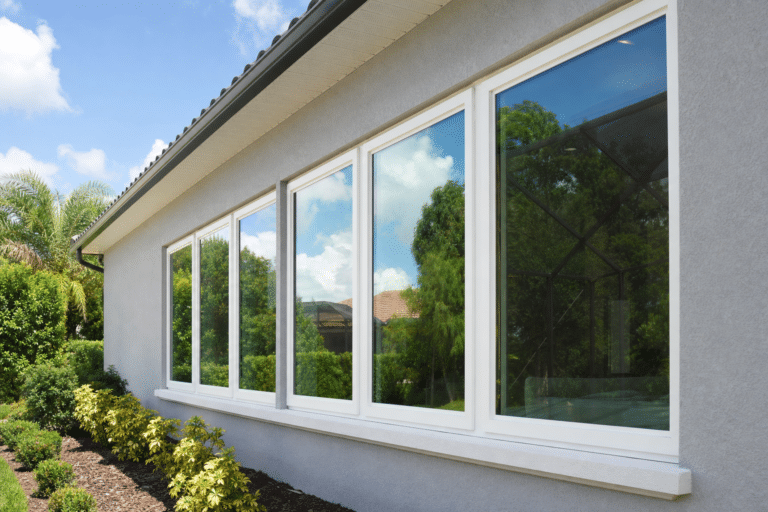
Your AC runs nonstop, and the bill keeps climbing. If that sounds familiar, your windows are probably the culprit. Old, inefficient windows let Florida's brutal heat pour straight into your home, so your cooling system grinds away just to keep things bearable. For Orlando homeowners, that's not a minor annoyance. It's money leaking out of your wallet every single month.
And the money problem is only half of it. Outdated windows leave your home exposed when storm season rolls in. From June through November, the last thing you want to wonder about is whether your windows can hold up against high winds and flying debris.
We get it, because we've helped thousands of Orlando homeowners fix exactly this. At GlassExperts, we do hurricane-resistant, energy-efficient window replacement built for Central Florida's punishing climate. We're local, so we know which windows will cut your cooling costs, hold the line during a storm, and shrug off Orlando's heat and humidity all year long.
Don't let another high-bill month slip by. Call us at (407) 214-3771 for your free, no-obligation window replacement consultation, or schedule your free in-home assessment online in under 60 seconds. We'll look at your current windows, walk through your options, and give you honest pricing. No pressure to commit.
Orlando homes need specialized windows because our subtropical climate throws challenges at your house that ordinary windows just can't take. Extreme heat, harsh UV, heavy humidity, and the threat of hurricanes all demand windows engineered for Florida living.
Central Florida gets some of the most intense solar exposure anywhere in the continental U.S. Daily temperatures push past 90°F from May through September, and the UV index regularly hits "extreme." Your windows are the front line against all that heat gain. Research shows that windows account for up to 30% of residential cooling energy use in hot climates (NIH).
Then there's the humidity. Orlando's average relative humidity sits around 75% year-round, and morning readings often top 90% (source). Windows without proper moisture barriers start fogging up fast, and that opens the door to mold, frame rot, and failed seals.
Living in Central Florida means bracing for hurricane season every year from June through November. Your windows are one of the weakest points in your home's exterior when a storm hits.
When hurricane-force winds arrive, the real threat usually isn't the wind by itself. It's the flying debris that can shatter an ordinary window, letting wind and rain rush inside. Once that happens, the pressure changes alone can do serious structural damage. Impact-resistant windows hold together even when something slams into them.

Vinyl and fiberglass windows hold up best in Orlando's climate, standing strong against heat, humidity, and salt air while asking almost nothing of you in maintenance.
Vinyl windows have become the go-to choice for Orlando homeowners, and it's easy to see why. The material doesn't absorb moisture, it won't rot or corrode in our humidity, and it keeps its shape under constant UV. Today's vinyl includes UV stabilizers that stop the chalking and fading that gave older windows a bad name.
Performance-wise, vinyl insulates naturally and doesn't conduct heat the way metal does. We usually recommend multi-chambered vinyl frames, which add insulation barriers inside the frame while keeping that lightweight, durable build that makes vinyl such a good fit for Florida.
Upkeep barely registers. You never paint vinyl, salt air won't corrode it, and a little soap and water keeps it clean. For homeowners who want a smart mix of performance, durability, and value, vinyl is a strong investment that typically lasts 20 to 30 years when it's installed right.
If you want the most durable option on the market, fiberglass earns its higher price. It's the strongest window frame material available, with tensile strength close to steel but none of the thermal conductivity headaches metal brings to a hot climate.
What really sets fiberglass apart is how still it stays. The frames won't expand, contract, warp, or bow, even when temperatures swing hard. That stability keeps seals tight for decades, so you avoid the air leaks and wasted energy that come when cheaper materials break down. Fiberglass holds its efficiency ratings longer than any other frame, performing well across a 30 to 40 year lifespan.
Impact-resistant windows aren't required for every Orlando home, but we strongly recommend them, and they may be mandatory depending on your location, your home's age, and the scope of your project.
The Florida Building Code sets wind load requirements based on your wind speed zone. Orange County sits in zones that require windows to handle specific wind pressures, and the code gives you two ways to comply: impact-resistant windows, or standard windows protected by code-compliant shutters.
For new construction and major renovations, you'll need impact-resistant windows or approved shutter systems. Orlando permitting authorities enforce this, and every window replacement requires a permit from Orange County Building Services. We take care of all permit applications so your installation meets current code and passes inspection.
Here's one of the best reasons to go with impact-resistant glass: the insurance discount. Florida law requires insurers to offer premium reductions for homes with certified storm protection.
Outfit your whole home with impact-resistant windows and you can trim 15 to 45% off your annual wind insurance premium. For a homeowner paying $2,000 to $3,000 a year, that's $300 to $1,350 back in your pocket annually. Over 20 years, those savings cover a real chunk of what you spent on the windows in the first place.
Energy efficiency ratings decide how much heat your windows let inside, and that shows up as real dollars saved or wasted on AC every month. Choose windows tuned for Florida's climate and you can cut cooling costs by 20 to 35%.
U-factor measures how well a window blocks heat from passing through. Lower numbers mean better insulation. For Central Florida, we recommend windows with U-factors between 0.25 and 0.40. ENERGY STAR certification for the Southern climate zone calls for U-factors of 0.40 or lower.
Double-pane windows with argon gas fills usually land right in that sweet spot for Orlando. They give you the thermal barrier that keeps conditioned air in and outdoor heat out.
Solar Heat Gain Coefficient (SHGC) is the single most important rating for Florida windows. It measures how much solar radiation comes through your windows as heat, and lower numbers block more of it.
We recommend SHGC ratings of 0.25 or lower for Orlando homes. Research shows that dropping SHGC from 0.40 to 0.25 can reduce solar heat gain by 37.5%, which takes a big load off your HVAC system.
Low-E (low-emissivity) coatings are what control SHGC. These ultra-thin metallic coatings bounce infrared radiation away while still letting visible light through, so your rooms stay bright without the heat that usually comes with it.
The savings here are real and measurable. Studies indicate that swapping single-pane windows for ENERGY STAR certified windows saves the average Florida homeowner $200 to $400 a year. Replace especially old or damaged windows and you can clear $500 a year.
That adds up fast. A $350 annual savings grows to $7,000 over 20 years, and that's at today's energy rates, before electricity prices climb any higher.
Window replacement in Orlando usually runs $450 to $1,200 per window installed, and most homeowners invest $8,000 to $18,000 for a whole-home project. Where you land depends on window size, material, glass options, and how involved the installation is.
Materials make up 40 to 50% of your total project cost. Standard vinyl windows run $200 to $500 each depending on size and features, while premium fiberglass runs $400 to $800 each. Impact-resistant glass adds $100 to $300 per window over standard insulated glass.
Labor for professional installation in Orlando typically runs $150 to $300 per window. That covers pulling out your old windows, installing the new ones with proper weatherproofing, finishing the interior and exterior trim, and cleaning up after ourselves. Jobs with structural changes or custom sizes can push labor higher.
How long does window replacement take? Most whole-home projects take 2 to 4 days, depending on how many windows you have. A single window swap can often be done in a day.
Do I need permits for window replacement in Orlando? Yes, Orange County requires permits for window replacement. We handle all permitting and inspections as part of our service.
What's the best time of year to replace windows in Orlando? You can replace windows year-round here, though plenty of homeowners prefer fall or winter when it's cooler. Whatever the season, we work fast to keep your home's exposure to a minimum during installation.
How long do replacement windows last in Florida? Quality vinyl windows usually last 20 to 30 years in Florida's climate, while fiberglass can last 30 to 40 years with proper installation and a little upkeep.
Will new windows really lower my energy bills? Yes. Most Orlando homeowners see cooling costs drop 20 to 35% after replacing old, inefficient windows with modern energy-efficient models.
Want to start saving on energy bills and protect your home from hurricane damage? Contact GlassExperts today at (407) 214-3771 or schedule your free consultation online. You'll get honest recommendations, clear pricing, and expert installation backed by our satisfaction guarantee.
"*" indicates required fields